
While there are many similarities across the various media formats that make up the entertainment industry, contrary to popular belief, video games aren’t at all written like movies. There isn’t a single screenwriter who lays out their grand plan in a single document, detailing exactly what every character does and when before handing it over to the rest of the creative team to, well, make.
Video games are more like TV, where there’s a group of people (sometimes known as a “writers’ room”) collaboratively work together to tell a story. But even then, video games are different. There’s no one single format, such as a screenplay, that we rely on in order to communicate story details to the player. Oh, yeah, and we have to consider that the player is an active participant in the unfolding of events, too.
Unfortunately the misconceptions about how games get written in general is perpetuated by the opacity and secrecy of the games industry (which often exists for good reason due to binding NDAs or trade secrets clauses, even if it also does the greater artform a disservice). But here at Stupendium Softworks, we’re doing our part to demystify how the video games we all love get made.
It’s at this point, where you might be wondering: hang on, Anna. You just said games aren’t written like movies… but your game is about movies. Your game even contains movies. True! Making The Seventh Screening has been a unique challenge from a writing perspective, so I wanted to write down some thoughts about the process, formats, and tricks of the trade that we’ve utilized to make it all happen.
Formatting
As mentioned, working as a game writer or narrative designer requires fluency in a variety of formatting in order to effectively write and/or convey information to the player. Because we use many forms of media in our game, such as film, audiologs, and traditional dialogue and barks, our writers’ room has had to learn to be flexible in terms of what formats we use on this project.
It’s also a large part of the StuSoft philosophy that our teams allow for growth, learning, sustainability, and opportunity. While myself and game director Alex have many years of experience writing games, we also have folks in the writers’ room who have never written a commercial game before. It’s important to us that we continue to bring in fresh, new talent, and allow those people to grow alongside the studio as writers, artists, and devs. This used to be the gold standard in the industry, but as time has gone on and writers’ rooms have become squeezed by corporate interests, this has become less and less frequent. But we want to bring back the mentality of allowing people to learn and grow on the job, so teaching these various formats was a fun part of the process for all of us. Writing is one of those things that you can’t really learn unless you actively practice it, and ultimately I always come away feeling I’ve learned just as much from those making their game writing debut.
Spreadsheets: Audiologs and Notes
One of the “cheapest” and most classic ways of conveying information to players is via the classic note or audiolog. However, when gamedevs say “cheap,” we’re often not referring directly to literal dollars. “Cheapness” in gamedev is typically a bit more immaterial: it’s referring to the amount of time it would take to make something, or the number of resources or personnel involved. And few things are cheaper than a spreadsheet!
We’ve been using Notion for a lot of our documentation on this project, and we found that it’s also a good place to keep track of all of our spreadsheets. So while I can’t show you the text of one of the notes from the actual game unless I want my bosses to get mad at me, here’s an example of what a spreadsheet for a note or audiolog could look like using the spreadsheet formatting we’ve been using:
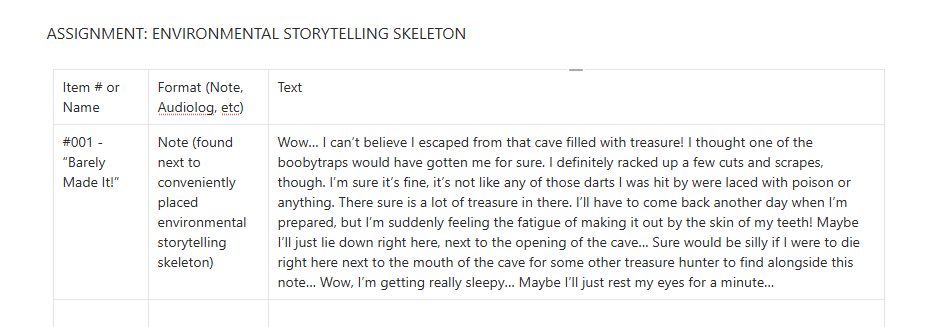
As you can see, life’s pretty tough for the average environmental storytelling skeleton. But at least they were able to provide some warning to the player that there’s dangerous traps inside that treasure-filled cave! Although this one is designated as a note in column 2, these can also be written as audio logs: you know a bit of voice recording you find on the body of a scientist who created some kind of abomination who is VERY sure that that abomination has NO chance of breaking free and killing them.
Notes and audiologs fall into a greater category known as “pickups,” named because, well… the player picks them up. They’re an easy, cheap way of conveying information to the player and can help build out the world in a way that feels more lived-in or filled with additional characters (even if they’re never directly seen onscreen). Growing up, some of my favorite characters in classic games like BioShock were only ever interacted-with through their audio logs, which creates a bit of mystique around them. After all, who doesn’t want to form a parasocial relationship with Brigid Tenenbaum?
You’ll find quite a few notes and audiologs scattered throughout The Seventh Screening, each written and placed with the utmost care. In fact, some of them will probably make you wish you never read/listened to them at all. 🙂
Screenplays: For Movies!
Because film and the golden age of Hollywood are so integral to this game, it only makes sense that we were going to have to do some screenwriting as part of production. Screenwriting is by far the most standardized of the formats we utilized on this project, but even still we definitely had to make some tweaks by nature of including player interaction.
Here’s an example of a (spoiler-free) side-by-side comparison of one of our screenplays with the finished product of the scene:
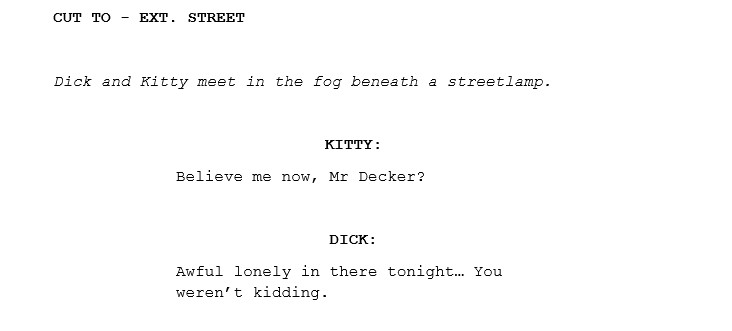
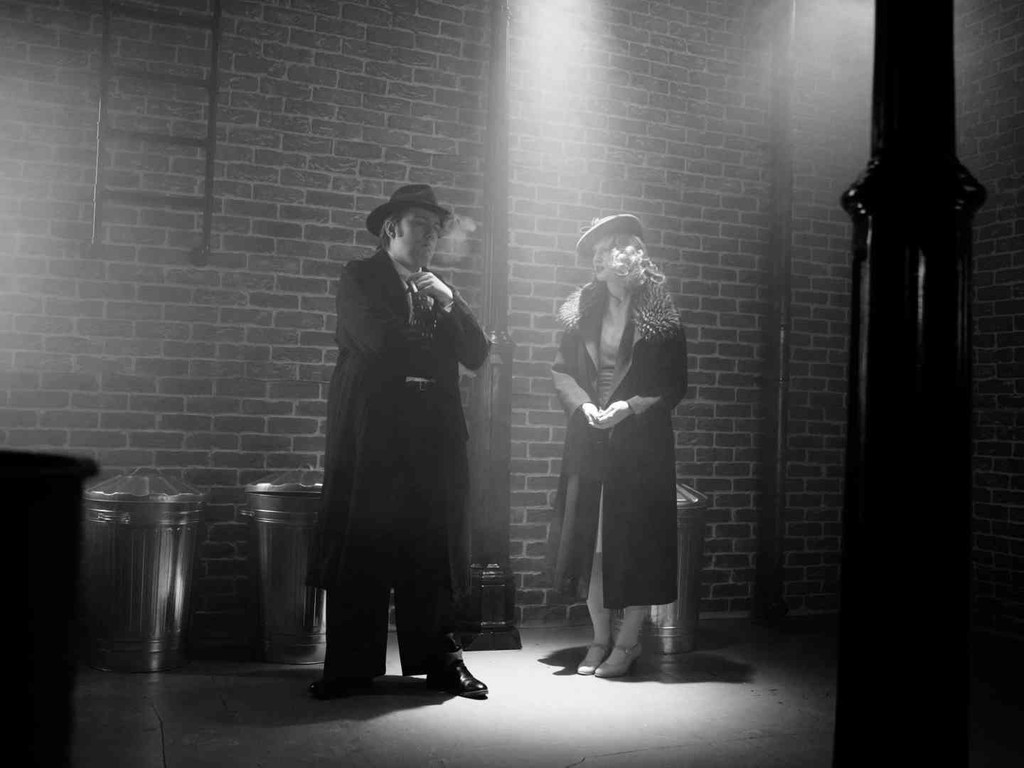
You may notice that our screenplay is relatively simple in its stage direction and descriptions: and that’s intentional! We are very fortunate that we have The Stupendium’s years of filmmaking expertise at our disposal, and that includes all of the folks who collaborate with Stupes themselves: set designers, costumers, production assistants, and the like… and we think that they should also be allowed to add their own creative juice to the delightful fruit punch that is one of our film productions. This is also our general approach to collaboration at StuSoft: where everyone can bring their own A-game to collectively make something incredible. Stupes and Gigi absolutely slayed this scene with their performances, too!
Processes
When it comes to managing all these scripts and formats, we knew that process was going to be paramount. We knew that we needed to be intentional about figuring out what ideas could move forward, what needed just a little bit of a spitshine or polish, and what unfortunately needed to go back to the drawing board before taking a second look. If the script materials are the “what,” processes are the “how.”
Pitching
An early part of our process for anyone who was contributing to the narrative of The Seventh Screening involved pitching. Even folks who were not strictly writers on the project were allowed to pitch if they’d like to try their hand at writing some narrative (while retaining a keen eye on how much work was on their plate for their primary discipline, of course).
Pitching typically looks like writing a short, communicative blurb about what you’d like to write, any details of what you’d like to include, and any notes, concerns, or flags for other departments that might need to be accounted for. We wanted to be very open about this process in early production, as pitching is an important skill for everyone on the team to develop regardless of their seniority: being able to distill an idea into a short message and discuss the scope, intention, and additional needs of a concept is a critical skill when we’re on a small team like ours – we want to make sure that we are investing our effort into the right places.
The pitches themselves are reminiscent of our spreadsheets – for example, this is what the associated pitch for the environmental storytelling skeleton note example shown above might look like:
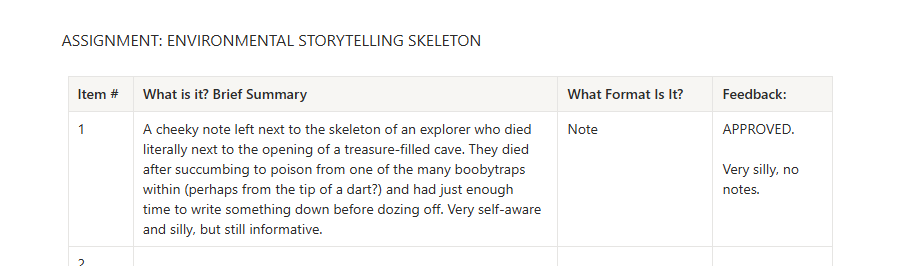
As you can see, we have a feedback column furthest to the right, which brings us to…
Review Processes
We also knew that if we were going to be inviting everyone on the team to pitch ideas, we were going to need a pretty airtight review process. In the case of our notes and pickups, we instituted a deadline for folks to make their pitches by. A few days after that, I (Anna – hi!), Alex, and Stupes sat down together over several sessions and reviewed each pitch one by one, giving them one of three statuses:
- APPROVED 🙂
- CONDITIONALLY APPROVED – SEE NOTES
- NOT APPROVED 🙁 – SEE ATTACHED NOTES
Okay, I know, that third one definitely looks a bit sad, but don’t fret: there were honestly very few that were given this distinction. Often, we felt that the content of the note or pitch itself would be better served elsewhere, such as in combination with another note someone else pitched.
But our notes and pickups weren’t the only thing that required review! Everything, including the film scripts themselves, was required to go through at least one feedback round before they were approved to move forward in production. Having several frequent, regular review periods was very helpful in preventing any kind of bottleneck which might cause other members of the team from getting blocked in one way or another.
After each feedback round, we’d provide some time for the writer to make any associated edits if we didn’t just give them the green light to get writing. Once those edits were approved, everyone would be set to go. Very pleased that narrative production was pretty smooth! Hooray for processes!
Animatics/Storyboards
Once a film script was given final approval, there was one more step to go through before live-action production and filming could commence: an animatic. For those unfamiliar, an animatic is a collected sequence of drawn storyboards with scratch audio of the dialogue played on top to get a sense of time and pace. It allows our live action production team the ability to design the associated sets and plan for the shoot so that everything is as faithful and efficient as possible.
Here’s a sneak peek at one of our animatics for a film you’ll be able to see in the game as drawn by our incredibly talented Stupengineer, Robin. Can you guess what it’s about?
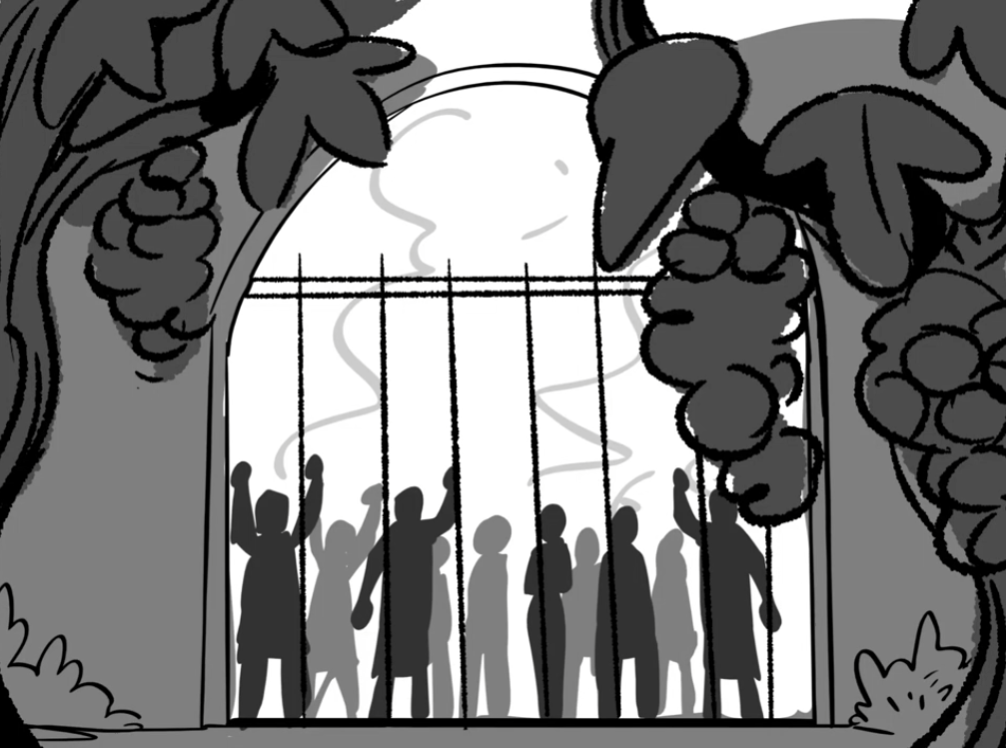
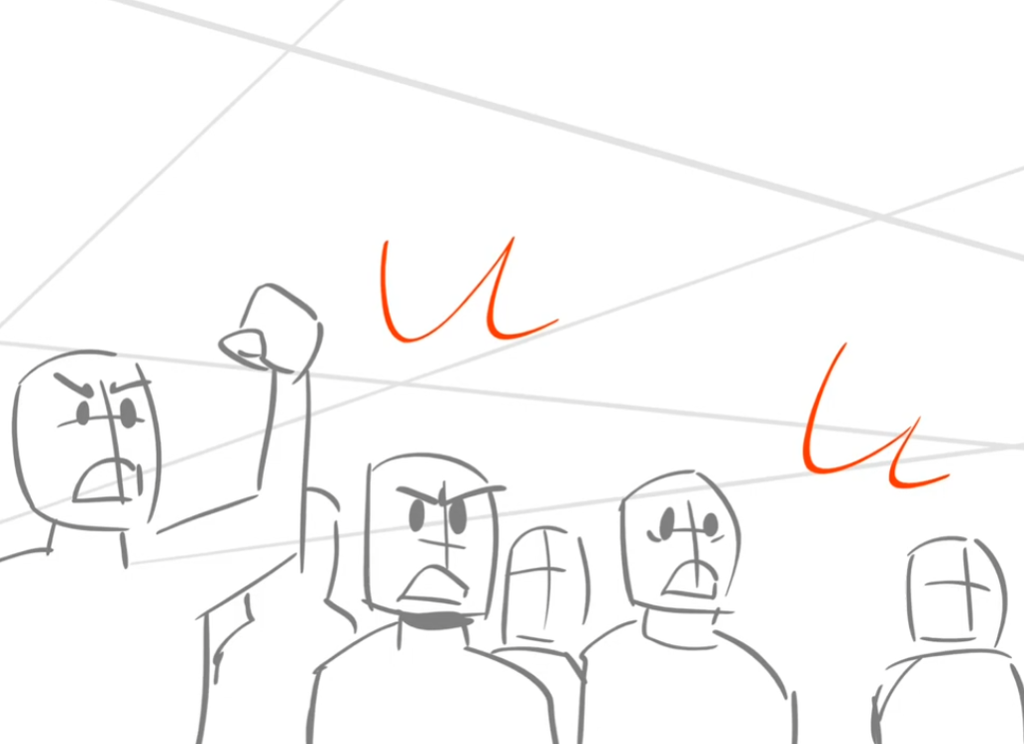
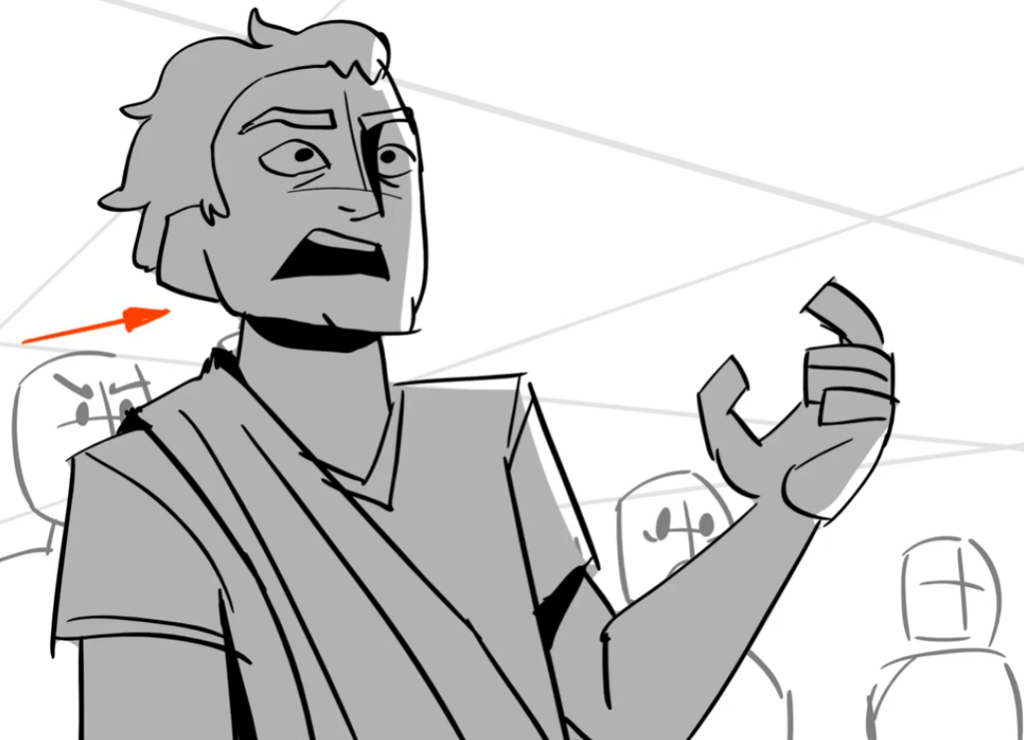
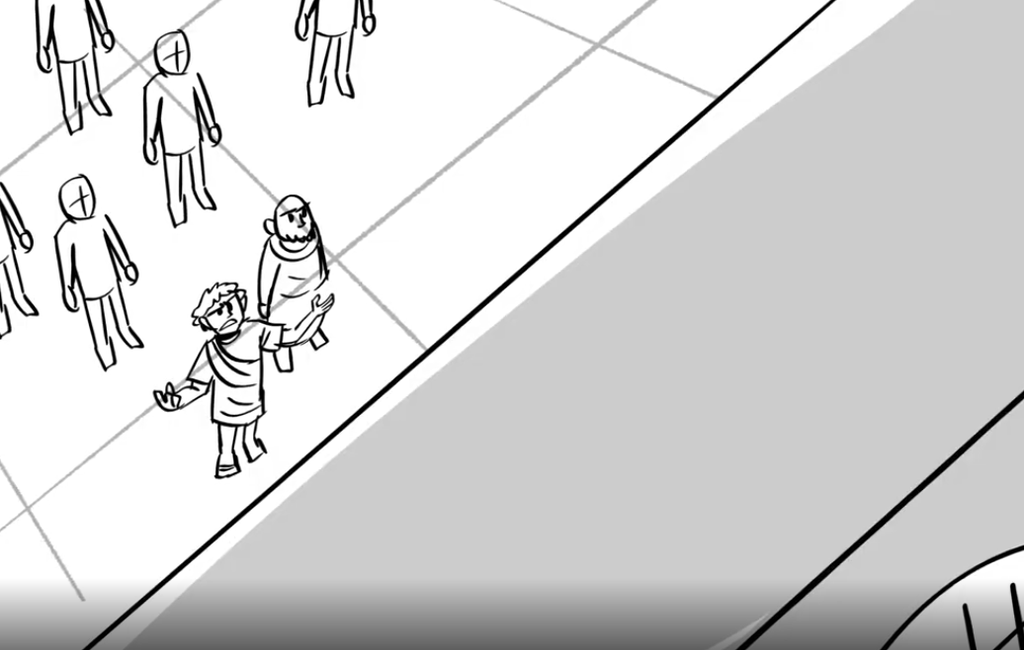
As you can see, the storyboards that make up the animatics themselves might be simple in their construction, but they establish important things like movement, perspective, and shot composition.
Once we can see all of the actions in time with the dialogue through the animatic, we’re able to make any last-minute changes that might need to be accounted for in terms of things like scope and timing before we send things forward to the film production side of StuSoft (because yes, even animatics have to go through our revision processes). 🙂
Have we piqued your interest?
We’re so thrilled to finally be able to share more about The Seventh Screening after keeping it top secret for so long. We’ve truly had a lot of fun throughout production and hope that from both this humble blog post and eventually through the game itself, you’ll be able to feel the love, care, and intentionality the whole team has put into making what we hope will be a real showstopper of a debut title.
From all of us in the narrative department at Stupendium Softworks: thank you so much for reading and following along with updates on The Seventh Screening. We cannot wait to show you what we’ve got in store.
